• 25.09.2024

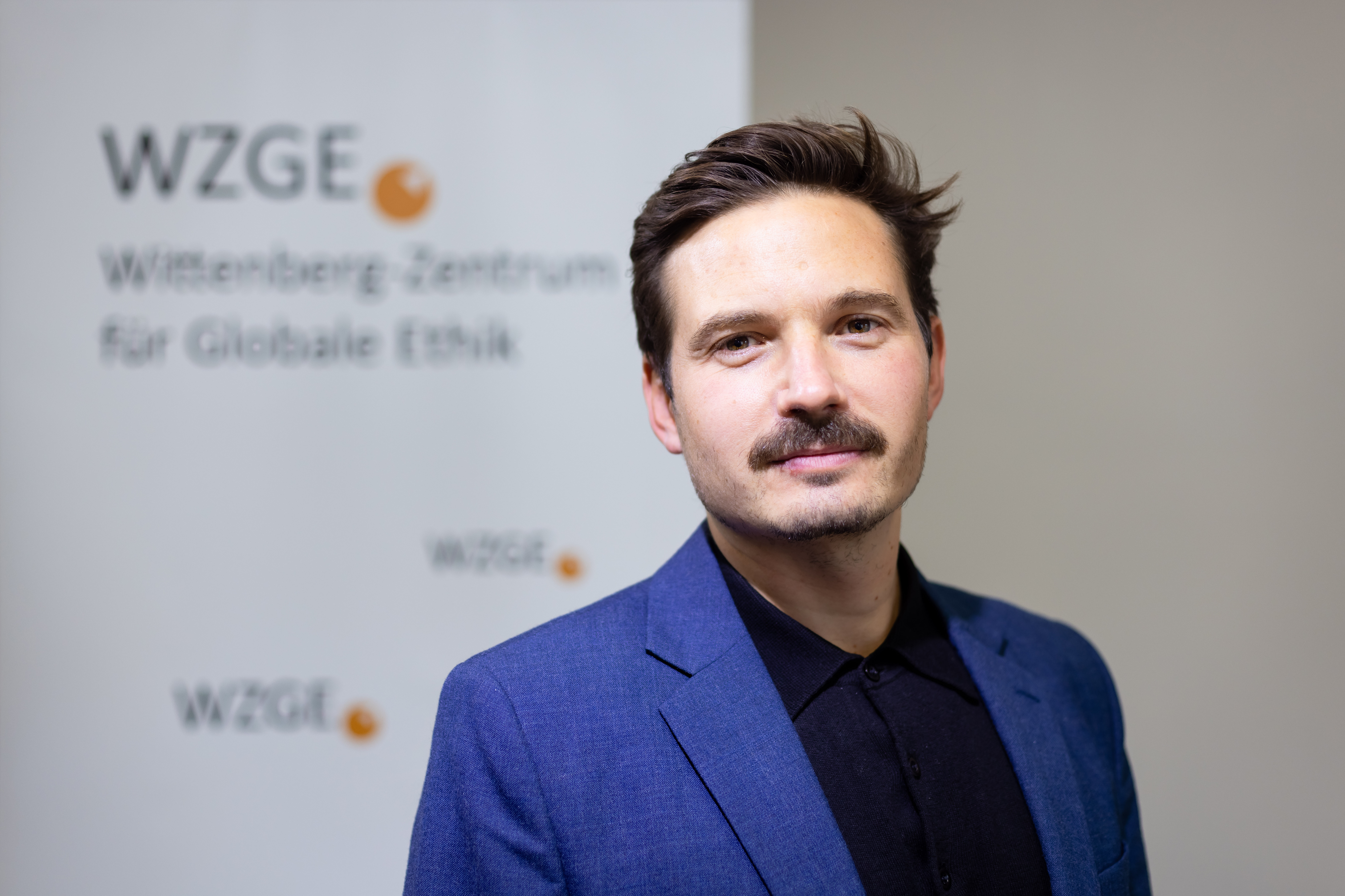
    Head of the Program:

    Prof. Dr. Philipp Schreck
    Friede-Springer Endowed Chair of Business Ethics and Management Accounting
    Martin-Luther-University, Halle-Wittenberg
    More information: https://unternehmensethik.wiwi.uni-halle.de/team/schreck/



    Academic Program Manager:

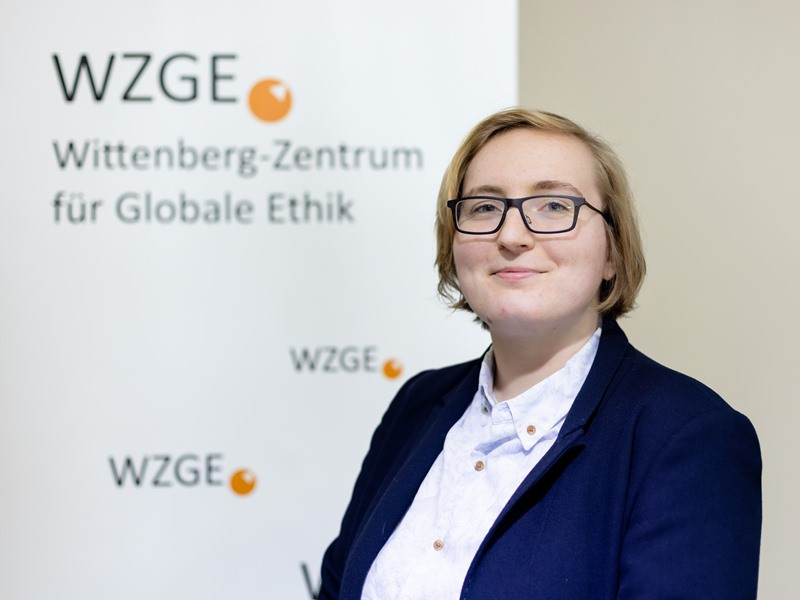
    Manon Filler
    Martin-Luther-University, Halle-Wittenberg

    Diese E-Mail-Adresse ist vor Spambots geschützt! Zur Anzeige muss JavaScript eingeschaltet sein.

    Phone: (+49) 345 55-23319
    More information: Manon Filler | LinkedIn


    Program Coordinator:
    Tatjana Arnold
    Wittenberg Center for Global Ethics
    Diese E-Mail-Adresse ist vor Spambots geschützt! Zur Anzeige muss JavaScript eingeschaltet sein.
    Phone: (+49) 3491 5079-116
    More information: https://www.linkedin.com/in/tatjana-arnold-1a43049b/

  • 25.09.2024

    Apply Now – Join the Doctoral Academy


    We welcome doctoral candidates who are committed to exploring the ethical, social and sustainable dimensions of business, leadership and society. The Doctoral Academy offers a unique opportunity to engage across disciplines, develop your research and connect with an international network.

    Who Can Apply

    • PhD candidates in philosophy, economics, management, social sciences or related fields whose research touches on ethics, responsibility or sustainability. Early-career scholars and advanced Master’s students are also welcome.
    • You may apply at any stage of your research process – whether you are designing your study, gathering data, or writing up. The modular format allows flexible participation in Writing Retreats and Academic Weeks.

    How to Apply

    1. Prepare your application documents (see list below).
    2. Submit all documents via our online application portal (see link below). We will only consider complete applications submitted through the portal – not documents sent by e-mail.
    3. Application deadlines for Writing Retreats, Spring School and Summer School will be announced throughout the year. Keep an eye on this page or our LinkedIn Page of the Wittenberg Center for Global Ethics for the latest.
    4. After submission, you will receive a confirmation of receipt.

    Application Documents (mandatory)

    • Motivation letter (in English, max. 500 words) summarising your research idea and why you wish to participate.
    • Curriculum vitae (in English)

    We look for applicants who:

    • Present a research topic with strong relevance for ethical, social or sustainability challenges
    • Are motivated to engage in interdisciplinary exchange and feedback
    • Are willing to collaborate and share insights with peer researchers from diverse backgrounds
    • Commit to using the module actively (attending sessions, contributing to discussions, applying insights to their work)


    Apply now for our Spring School “Experimental Research on Moral Judgement and (Un)Ethical Behavior“ via our Online Application Portal (8-12 March 2026)

    Apply now for our Writing Retreat here (7-11 April 2026).


    We accept max. 20 participants for each event and will send out acceptance letters on a rolling basis so our spots may fill out quickly!

  • 25.09.2024

    Study Program – Building Ethical Research Skills

    The Doctoral Academy’s Study Program combines rigorous academic training with dedicated writing and reflection time. Across the academic year, participants can flexibly take part in three core components: the Spring School on Experimental Methods, the Summer School on Normative Arguments and Practical Implications, and focused Writing Retreats.


    Spring School “Experimental Methods” (Course Description)

    Research on morality and business has flourished in recent years, offering both fascinating insights into how individuals and organizations behave and compelling arguments for how they should behave. The breadth of this field brings together diverse disciplines and methodologies – creating exciting opportunities for interdisciplinary collaboration but also posing challenges for young researchers who may be unfamiliar with certain empirical approaches.

    This Spring School is designed to provide PhD scholars with a foundation in experimental research within normative contexts. Our goal is to equip participants – especially those with little to no empirical training (e.g., ethicists or philosophers) – with practical tools to begin designing and conducting their own experiments. At the same time, we aim to raise awareness among empirically trained researchers (e.g., economists or psychologists) of the unique challenges and ethical considerations that arise when applying empirical methods to normative questions.

    Participants will be guided through the process of developing their own research ideas and experimental designs, with an emphasis on how to ask and answer questions with ethical and societal relevance. Beyond study design, the course also emphasizes the translation of findings into practice through collaboration with both academic researchers and practitioners.


    Summer School “Normative Arguments and Practical Implications” (Course Description)

    Research in business ethics is increasingly attentive to the intersection of theory and practice, raising questions not only about what makes for strong normative arguments but also about how such insights can shape organizational and societal life. This field thrives on its interdisciplinary nature – drawing on philosophy, economics, psychology, and management – yet this diversity can also pose challenges for PhD scholars navigating unfamiliar approaches and audiences.

    The Summer School provides participants with the conceptual grounding to advance their work in business ethics and related fields. Through a combination of lectures, workshops, and peer discussions, participants reflect on what makes for compelling research questions, how normative work can generate real-world value, and how to communicate their findings to different audiences – from academic peers to practitioners and policymakers.


    Writing Retreats (Description)

    The Writing Retreats offer participants dedicated time and space to focus on their individual research projects in a concentrated yet collegial atmosphere. Held in a quiet setting conducive to writing and reflection, the retreats balance structured academic exchange with independent work.

    The retreats typically include short sessions for peer feedback and discussions on challenges in the writing process – from structuring arguments and clarifying contributions to maintaining motivation and momentum. The goal of the retreats is to help participants make tangible progress on their dissertations.


    Example Schedules (For orientation only)
    Curious about what a typical academic week or writing retreat looks like? Below you can find a PDF with example schedules from a previous Spring and Summer School as well as a Writing Retreat of the Doctoral Academy. These examples illustrate the structure and types of sessions, so you know what to expect. Please note that the content, speakers, structure and timing may vary for each upcoming program.

    Example Schedules

    Participation Fee

    Participation in the Doctoral Academy’s academic weeks and writing retreats involves a fee to cover accommodation and meals.

    • Writing Retreat:€50.00 (net)
    • Academic Week:€150.00 (net) 

    Included in the fee:

    • Accommodation during the program week (Sunday till Thursday)
    • Breakfast and Dinners
    • Two shared lunches during the week

    Not included:

    • Travel costs to and from Wittenberg
  • 25.09.2024

    The program is aimed at DOCTORAL STUDENTS

    • working on topics related to business or leadership ethics from all academic disciplines
    • with a background in business administration, economics, philosophy, law or other relevantenrolled at a European University
    • Late-stage Master students with a clear interest in academia and early-stage career researchers are also welcome.
    • We accept max. 20 participants for each event and will send out acceptance letters on a rolling basis so our spots may fill out quickly!


    What our Alumni says:

    „[…]. Both the courses and seminars as well as the fruitful in-class discussions with the student body but even more so the extracurricular, interdisciplinary exchange with colleagues and professors support the own thought process and help to align and transform what was once only a theoretical idea into your very own scientific contribution in the end.“

    Dr. Katharina de Biasi, Business Development
    Bosch Climate Solutions

  • 25.09.2024

    From Doctoral Program to Doctoral Academy – A New Chapter in Ethical Research Training

    History and Development

    The Doctoral Academy continues and expands the tradition of doctoral education at the Wittenberg Center for Global Ethics (WCGE). From 2016 to 2026, the WCGE hosted the Doctoral Program "Ethics and Responsible Leadership in Business", generously supported by the Karl Schlecht Foundation (KSG). Over these years, the program provided an intensive three-year structured curriculum for cohorts of doctoral researchers. Each year, a new group of PhD candidates entered the program and engaged in a combination of core courses, elective seminars, regular Jour Fixe meetings, research colloquia and mini colloquia for presenting work in progress. This structured format laid a strong foundation for WCGE’s role as a hub for ethical research and doctoral support.

    Transition to the Doctoral Academy (from 2024)

    In 2024, the Doctoral Program evolved into the Doctoral Academy – a more flexible and inclusive model designed to respond to the growing diversity of research projects, disciplines, and international partnerships connected to WCGE. While the Doctoral Program operated in fixed three-year cohorts, the Doctoral Academy now offers modular participation, where max. 20 doctoral candidates for each event can join at different stages of their research. This evolution reflects WCGE’s commitment to shaping a dynamic research community – one that remains academically rigorous while addressing contemporary ethical challenges in a rapidly changing world.

    Our Mission

    The Doctoral Academy aims to:

    • Promote interdisciplinary ethical research of high academic quality.
    • Support the personal and professional development of early-career researchers.
    • Bridge academic insights and societal impact through dialogue with practitioners.

    Partners

    The Doctoral Academy is hosted by the WCGE and the Friede Springer Chair of Business Ethics and Management Accounting at Martin-Luther-Universität Halle-Wittenberg. It is generously funded by the Karl Schlecht Foundation.

  • Academy
    25.09.2024

    Where research meets responsibility

    The Doctoral Academy hosted by the WCGE and the Friede Springer Chair of Business Ethics and Management Accounting at Martin-Luther-Universität Halle-Wittenberg is an interdisciplinary training and research community for doctoral candidates working on diverse questions of ethics, responsibility, and sustainability.

    The Academy combines academic “schools” on key research and methodological topics with “writing retreats” designed to foster focus and exchange:

    • Spring School: Experimental Research– exploring empirical methods and their ethical dimensions (6 ECTS),
    • Summer School: Normative Arguments and Practical Implications– engaging with moral theory and its relevance for real-world decision-making (6 ECTS), and
    • Writing Retreats– providing space for structured feedback, peer exchange, and concentrated writing time.


    Doctoral candidates from philosophy, economics, management, the social sciences, and related fields are invited to join and participate according to their individual research phase. The modular design allows researchers to engage with specific academic weeks that best support their projects.

    Key Dates for the 2025/26 Term

    • 9-13 November 2025 – Writing Retreat (Application closed)
    • 8-12 March 2026 – Spring School (Experimental Research)
    • 7-11 April 2026 – Writing Retreat
    • 30 August - 3 September 2026 – Summer School (Normative Arguments & Practical Implications)

    Application forms for each academic week (max. 20 participants per event) are released sequentially throughout the year, allowing candidates to apply for individual modules that match their research needs.

    The Academy is funded by the Karl Schlecht Foundation.

     What Participants Gain

    • Opportunities to participate in interdisciplinary academic courses
    • Skill training on experimental research design
    • A vibrant international community of emerging scholars committed to ethical inquiry and social impact
    • Dedicated writing time and peer feedback on research projects
    • Opportunities to network of scholars and practitioners


  • 10.05.2022

    Welche Erwartungen haben die Menschen an politische Interessenvertretung in der Wirtschaft? Und wie sollten Unternehmen darauf eingehen? In unserer neuen Studie geben wir Antworten.

    Unternehmerisches Lobbying wird kontrovers diskutiert: Mache wünschen sich mehr unternehmerische Kompetenz bei der Lösung gesellschaftlicher Probleme. Andere fürchten vor allem Manipulationen durch einflussreiche Branchen und Konzerne. Dieses Spannungsfeld ist der Ausgangspunkt für unsere Studie „Verantwortliches Lobbying im nachhaltigen Wandel“ (Autoren: Prof. Philipp Schreck, Dr. Martin von Broock, Moritz Appels).

    Mit einem innovativen Studiendesign (Kombination von Befragung und Experiment) sind wir folgenden Fragen nachgegangen: Wie beurteilen die Menschen die Lobby-Arbeit von Unternehmen? Welche Kriterien beeinflussen die Akzeptanz von Lobbying? Und welche Handlungsempfehlungen lassen sich daraus für verantwortungsvolle politische Interessenvertretung ableiten? Die Kernergebnisse im Überblick:

    Wahrnehmung von Lobbying: Im Prinzip sinnvoll, aber konkret schädlich

    Die große Mehrheit der Befragten (93%) schätzt den Einfluss von Lobbying auf die deutsche Politik als hoch ein. 78% Prozent bewerten diesen Einfluss negativ. In der Folge wünschen sich 89% eine stärkere Einschränkung von Lobbying. Allerdings ist gleichzeitig eine knappe Mehrheit von 52% der Ansicht, dass Lobbying politische Entscheidungsprozesse im Prinzip verbessern könnte.

    Für Unternehmen bedeutet das: Da politische Interessenvertretung im Prinzip als sinnvoll erachtet wird, lohnen sich Investitionen in eine bessere Lobbying-Praxis. Denn die Akzeptanz unternehmerischen Lobbyings entscheidet über die „license to sit at the table“.

    Stärkster Akzeptanzhebel: Die Position

    Am konkreten Beispiel Klimaschutz wird deutlich: Die stärkste Hebelwirkung hat die im Lobbying vertretene Position. Setzt sich ein Unternehmen für mehr (statt weniger) Klimaschutz ein, dann stößt die Lobby-Maßnahme auf deutlich stärkere Akzeptanz bei den Befragten.

    Für Unternehmen folgt daraus: Interessenvertretung gegen ambitionierten Klimaschutz hat wenig Aussicht auf Akzeptanz. Trotzdem muss unternehmerische Kritik an Klimaschutzmaßnahmen möglich bleiben. Für mehr Akzeptanz sollte Lobbying dann aber (1) das unternehmerische Bekenntnis zum Klimaschutz mindestens nicht unterminieren und (2) bessere Alternativen zur Erreichung des jeweiligen Ziels benennen.

    Wechselwirkungen: Konsistenz entscheidet, Transparenz flankiert

    Von progressivem Klimalobbying profitieren vor allem Unternehmen mit hoher ökologischer Reputation. Umgekehrt verschafft ihnen ihre Reputation aber keinen „Kredit“ für weniger ambitionierte Lobbymaßnahmen. Auch Unternehmen mit geringer ökologischer Reputation können mit progressiverem Klimalobbying ihre Akzeptanz steigern. Die Effekte fallen aber geringer aus.

    Heißt: Wer sein Klimaschutz-Lobbying von "defensiv“ auf „progressiv“ umstellt, kann nur begrenzte Quick-Wins erwarten und muss zunächst in seine ökologische Performance investieren. Demgegenüber führt defensives Klimalobbying in jedem Fall zu Akzeptanzverlusten. Ein Teil jener Verluste kann allerdings durch eine bessere Transparenz im Lobbying aufgefangen werden.

    Entscheidend für die Akzeptanz von Lobbying ist also die Konsistenz (oder Integrität) von Haltung, Handeln und Historie eines Unternehmens im Einklang mit gesellschaftlichen Zielstellungen. Dabei spielt Transparenz zwar nur eine flankierende Rolle; sie zahlt sich aber in jedem Fall aus. Unternehmen, die in die Akzeptanz ihres Lobbyings investieren wollen, sollten sich also an der Reihenfolge „Was“ vor „Wer“ vor „Wie“ orientieren.

    Download der Studie „Verantwortliches Lobbying im nachhaltigen Wandel“

  • 10.12.2021

     gebauer

    Title of Dissertation: Reframing Compliance – investing in enabling conditions

    Supervisor: Prof. Dr. Andreas Suchanek
    University: HHL – Handelshochschule Leipzig
    Scholarship: sdw – Stiftung der Deutschen Wirtschaft
    Cohort: 8th Cohort, since 2021
    Email: Diese E-Mail-Adresse ist vor Spambots geschützt! Zur Anzeige muss JavaScript eingeschaltet sein.


  • 10.12.2021

     gruetzner

    Title of Dissertation: What if…? Counterfactual reasoning in ethical decision-making in business contexts

    Supervisor: Prof. Dr. Philipp Schreck
    University: MLU Halle-Wittenberg
    Scholarship: HaVo-Stipendium
    Cohort: 8th Cohort, since 2021
    Email: Diese E-Mail-Adresse ist vor Spambots geschützt! Zur Anzeige muss JavaScript eingeschaltet sein.

  • 10.12.2021

     ilozumba

    Title of Dissertation: Reframing Data Privacy in Business Using the Do No Harm Principle as an Ethical Focal Point

    Supervisor: Prof. Dr. Andreas Suchanek
    University: HHL – Handelshochschule Leipzig
    Scholarship: Karl Schlecht Stiftung
    Cohort: 8th Cohort, since 2021
    Email: Diese E-Mail-Adresse ist vor Spambots geschützt! Zur Anzeige muss JavaScript eingeschaltet sein.

  • 10.12.2021

     klingbeil

    Title of Dissertation: Experimental Analysis of Various Trust Repair Methods and Their Dependance on Influence Factors in Human-Machine Interactions

    Supervisor: Prof. Dr. Philipp Schreck
    University: Martin-Luther-Universität Halle-Wittenberg
    Scholarship: Scholarship by the sdw (Foundation of German Business)
    Cohort: 8th Cohort, since 2021
    Email: Diese E-Mail-Adresse ist vor Spambots geschützt! Zur Anzeige muss JavaScript eingeschaltet sein.

  • 10.12.2021

     klingbeil

    Title of Dissertation: Consumer Decisions and the Trade-off between Economic and Moral Objectives. An Investigation of Responsible Consumer Behavior Using the Ordonomic Approach

    Supervisor: Prof. Dr. Ingo Pies
    University: Martin-Luther-Universität Halle-Wittenberg
    Scholarship:
    Cohort: 9th Cohort, since 2022
    Email:

  • 10.12.2021

     klingbeil

    Title of Dissertation: An infinite understanding of the game as prerequisite to self-limitation in apparel consumption

    Supervisor: Prof. Dr. Andreas Suchanek
    University: HHL Graduate School of Management
    Scholarship: Karl Schlecht Stiftung
    Cohort: 9th Cohort, since 2022
    Email:

  • 10.12.2021

     klingbeil

    Title of Dissertation: Just and trustworthy leadership? When algorithmic leaders enter ethically sensitive domains

    Supervisor: Prof. Dr. Philipp Schreck
    University: Martin-Luther-Universität Halle-Wittenberg
    Scholarship:
    Cohort: 9th Cohort, since 2022
    Email:

  • 10.12.2021

     klingbeil

    Title of Dissertation: How Do Companies Tackle Societal Issues Successfully? A review of Corporate Purpose, Equity Ownership and Intrapreneurship

    Supervisor: Prof. Markus Beckmann
    University: Friedrich-Alexander-Universität Erlangen-Nürnberg
    Scholarship: KSG Scholarship
    Cohort: 9th Cohort, since 2022
    Email:

  • 10.12.2021

     klingbeil

    Title of Dissertation: From Intentions to Actions: Exploring the Integration of Sustainability in Organizational Practices

    Supervisor: Prof. Markus Beckmann
    University: Friedrich-Alexander-Universität Erlangen-Nürnberg
    Scholarship: Application for the Klaus Murmann Scholarship
    Cohort: 9th Cohort, since 2022
    Email: Diese E-Mail-Adresse ist vor Spambots geschützt! Zur Anzeige muss JavaScript eingeschaltet sein.


  • 10.12.2021

     klingbeil

    Title of Dissertation: The Business Case for Corporate Digital Responsibility in Managing the Twin-Transformation

    Supervisor: Prof. Dr. Philipp Schreck
    University: University of Halle/Wittenberg
    Scholarship: Karl-Schlecht Stiftung
    Cohort: 10th Cohort, since 2023
    Email: Diese E-Mail-Adresse ist vor Spambots geschützt! Zur Anzeige muss JavaScript eingeschaltet sein.