• 08.07.2026

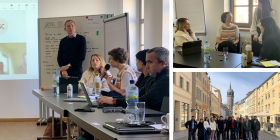
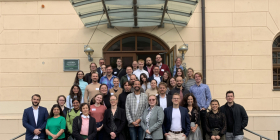
    From 2014 to 2025, the Doctoral Program “Ethics and Responsible Leadership in Business” at WCGE offered a structured, fully funded three-year training and research environment for emerging scholars in business ethics. Each year, a new cohort of PhDs joined the program and followed a comprehensive curriculum combining core courses, elective seminars, regular Jour Fixe meetings, research colloquia, and dedicated sessions for presenting work in progress.

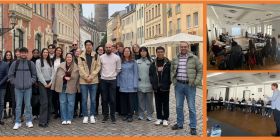
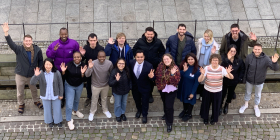
    Over the course of ten years, 42 doctoral researchers from 14 countries completed the program. Together, they carried out 31 application-oriented field projects, translating ethical theory into practical impact within companies and organizations. The program’s graduates have gone on to successful careers in business, public institutions, academia, and startups, where they contribute to embedding ethical principles in leadership and decision-making.

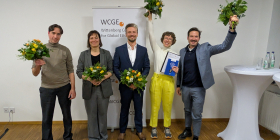
    The academic excellence of the program is reflected in prestigious recognitions, including the Wolfgang Ritter Prize awarded to alumni Julia Grimm and Rebecca Rühle, and the Max Weber Prize for Business Ethics awarded to alumna Sabine Wiesmüller.

    Transition to the Doctoral Academy (from 2024)

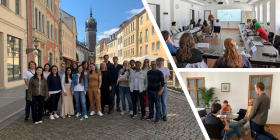
    In 2024, the Doctoral Program evolved into the Doctoral Academy, a more flexible and inclusive model designed to respond to the growing diversity of research projects, disciplines, and international partnerships connected to WCGE. While the Doctoral Program operated in fixed three-year cohorts, the Doctoral Academy now offers modular participation, where doctoral candidates can join at different stages of their research. This evolution reflects WCGE’s commitment to shaping a dynamic research community, one that remains academically rigorous while addressing contemporary ethical challenges in a rapidly changing world.

    Our Mission

    • Promote interdisciplinary ethical research of high academic quality
    • Support the personal and professional development of early-career researchers
    • Bridge academic insights and societal impact through dialogue with practitioners


    Alumni of the Doctoral Program:´(2014 - 2025)

    Cohort 1

    Dr. Fabian Simmank

    Dr. Dr. Michaёl Suurendonk

    Dr. Ingrid Panontongan

    Dr. Kusi Appiah

    Dr. Marcel Pillath

    Cohort 2         

    Dr. Marco Möhrer

    Dr. Linda Kannenberg

    Dr. Simon Piest

    Dr. Katharina de Biasi

    Prof. Dr. Julia  Grimm

    Cohort 3

    Dr. Elena Jakob

    Dr. Sabine Wiesmüller

    Prof. Dr. Rebecca Rühle

    Dr. Andani Thakhathi

    Cohort 4         

    Dr. Magdalena Wallkamm

    Adrian Gombert

    Dr. Raphael Ng

    Dr. Nils Kruse

    Dr. Benedikt Kirner

    Cohort 5         

    Dr. Dijana Galijasevic

    Dr. Lili Jassemi

    Dr. Gonzalo Conti Perochena

    Dr. Marie Schwimmer

    Dr. Alexander Reese

    Cohort 6         

    Dr. Felix Wittke

    Dr. Christian Kroll

    Prof. Dr.  Moritz Appels

    Dr. Hannah Schragmann

    Cohort 7         

    Dr. Oleg Fedoseev

    Dr. Taiwo Yussuff

    Dr. Shayan Ali Khan

    Dr. Emma van den Terrell

    Cohort 8         

    Dr. Stephan Gebauer

    Cassandra Grützner

    Dr. Usochi Ilozumba

    Artur Klingbeil

    Cohort 9

    Simon Merz

    Dr. Manon Filler

    Dr. Vittorio Cerruli

    Christin Philipp

    Dr. Georg Röder

    Cohort 10

    Dennis Hüper

     
     
  • 08.07.2026

    The Scholar in Residence programme of the Doctoral Academy annually invites an established researcher in the field of business, corporate, and leadership ethics (empirical or normative) to spend a period of four to six weeks in Wittenberg or the greater region (Berlin, Halle, or Leipzig).

    Duration

    4 to 6 weeks

    Weekly stipend

    € 800 per week (Accommodation and food allowance)

    Travel costs

    Up to € 500 in total (travel to and from Wittenberg)

    Location

    Wittenberg or greater region (Berlin, Halle, Leipzig)

    Frequency

    1 Scholar per year, 3 Scholars in total between 2026-2029

    Selection

    Open application process

     Benefits for Scholars

    • Dedicated research time in a stimulating intellectual environment
    • Interaction with engaged doctoral researchers
    • Optional: Opportunity to present and develop their work
    • Optional: Potential for joint projects or publications

    Applications are welcome from established researchers (postdoctoral researchers, junior professors, and professors) working in one of the following areas:

    • Business ethics (normative or empirical)
    • Corporate governance and leadership ethics
    • Related disciplines with a clear link to business or corporate ethics

    For more information about our selection critera, application process and timeline please read this document carefully.

  • 08.07.2026

    The Mini-Grants of the Doctoral Academy fund paper-based, empirical research projects led by doctoral researchers in the areas of business, corporate, and leadership ethics. Three grants are awarded annually, nine in total over the funding period 2026-2029.

    The grants specifically support key phases of empirical research projects: study design, pre-testing, participant recruitment, and, where applicable, incentivisation in economic experiments. A demonstrable practical relevance is a mandatory requirement for all applications.

    Grant amount

    € 4,000 per person per year

    Grants per year

    3 grants (9 in total between 2026-9)

    Eligible applicants

    Doctoral researchers in business, corporate, or leadership ethics (research teams must consist of at least 1 applying doctoral researcher)

    Methodological focus

    Empirical designs, particularly experiments; qualitative studies also eligible

    Selection process

    Review by an expert jury

    Application deadlines

    (1) 31 December (annually)

    (2) 30 June (annually)

    Decision communicated

    (1) By end of January/ beginning of February (annually)

    (2) By end of July/ beginning of August (annually)

    Final deliverables

    (1) Short report + presentation by mid-October

    (2) Short report + presentation by mid-December

    Funding Objectives

    • Enable independent empirical research projects of early-career researchers
    • Support innovative approaches in business and corporate ethics research
    • Strengthen the research competencies of doctoral scholars
    • Generate insights for academia, business, and society
    • Increase the visibility of ethics-focused research by early-career scholars

    Eligible Papers

    Grant funds may be used for the following purposes:

    Primary focus: Experimental research designs

    • Conducting laboratory or online experiments
    • Participant incentives (honoraria, vouchers)
    • Pre-testing and piloting costs
    • Platform fees (e.g. Prolific)

    Further eligible areas

    • Field research travel for data collection (qualitative studies)
    • Software for transcriptions, data analysis or survey tools

    For more information about the application and selection process please read this document carefully.